 Overview
The department of Ophthalmology at AMALA IMS contains a team of impressive Ophthalmologists who are experts in examining, diagnosing and providing the most suitable treatment of all ocular diseases. The department has kept abreast with the latest technological developments and is capable of treating all types of retinal diseases.

Perimetry by HFA
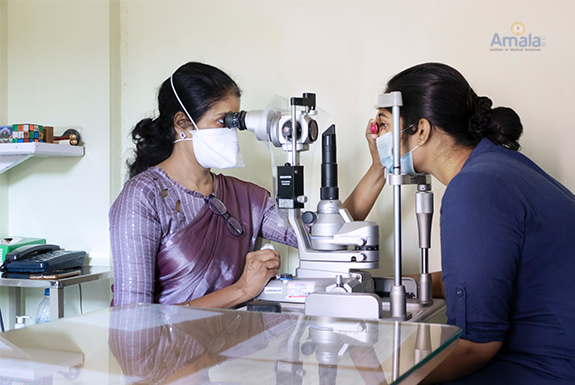
Slit lamp biomicroscopy

OCT
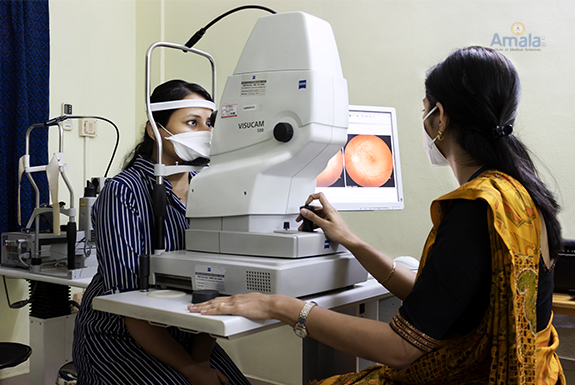
Fundus photography

Retinal laser photocoagulation
Glass checking and refraction
Comprehensive ophthalmic OPD Care
Round-the-clock ocular emergency care
Ophthalmic support for multidisciplinary patient care
Phacoemulsification with intraocular lens implantation
Small Incision cataract surgery with intraocular lens implantation
Anterior chamber IOL Implantation
Anterior vitrectomy
Yag Laser Capsulotomy
OCT (Optical Coherence Tomography)
Fundus Photography
Fundus Fluorescein Angiography (FFA)
Retinal Lasers
Intravitreal injections
Retina clinic for treatment of diabetic Retinopathy, age related Macular Degeneration, Vein Occlusions and other retinal diseases
Anterior segment OCT Scan
Pachymetry
Pterygium excision with Conjunctival Autograft
Contact Lens Clinic
Humphrey Automated Perimetry
Applanation Tonometry
Gonioscopy
Nd Yag Laser Iridotomy
If you're experiencing blurred vision, eye pain, recurring redness, or other changes in eyesight, an ophthalmologist can help. An eye hospital in Thrissur like Amala provides assessment for conditions such as cataracts, glaucoma, diabetic eye disease, and retinal problems.
It depends on your age, risk factors, and whether you wear corrective lenses. You should have your eyes examined if you notice changes in vision, recurring headaches related to eyesight, or persistent eye discomfort. Sudden vision loss, severe pain, or a new shadow across your vision requires urgent attention from an ophthalmologist.
Yes, it can affect your eyesight permanently. Glaucoma damages the optic nerve and can slowly lead to loss of eyesight (sometime without early symptoms). Timely glaucoma treatment in Thrissur can help protect the vision that remains, making early diagnosis especially important.
You know it when your vision begins to feel progressively blurred, dim, or like you are looking through a fogged-up window. You will have difficulty seeing at night and might get double vision as well. You should confirm it via an eye examination from a ophthalmology specialist.
Yes, because diabetes can damage the small blood vessels in the retina even before you notice any sort of changes in vision. Regular eye examinations from a retina specialist hospital in Kerala can help detect problems early and protect your long-term eye health.
Occasional floaters can be harmless, but sudden flashes, many new floaters, or a dark curtain-like shadow can indicate a retinal problem. Seek urgent eye care if you experience these symptoms.
That depends on your age, vision, family history, and existing medical conditions. An ophthalmology specialist in Thrissur can recommend how frequently your eyes should be checked.